AI Code Review Is Not Release Verification
A clean pull request is evidence about the change. It is not evidence about every behavior the release could affect.
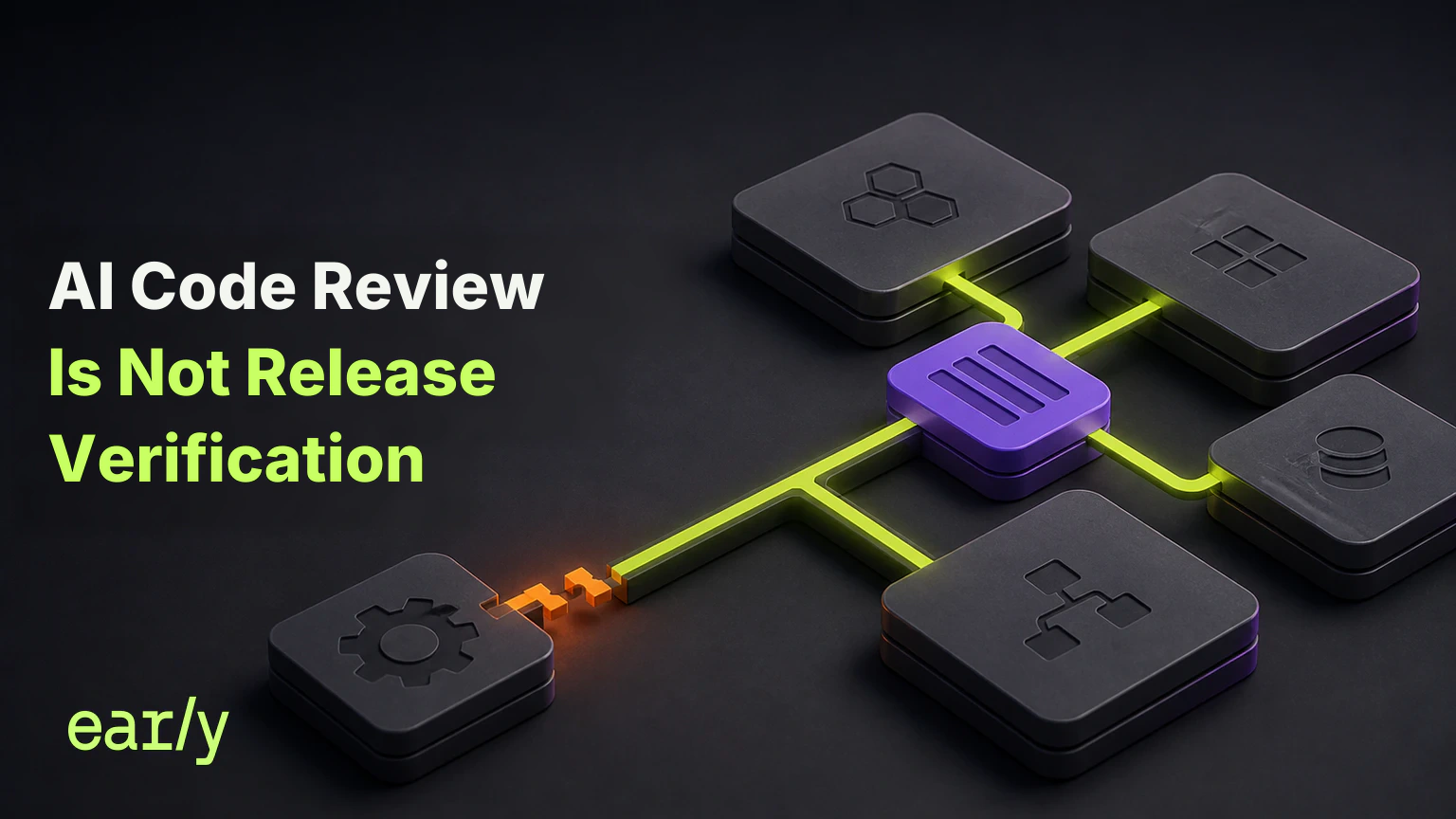
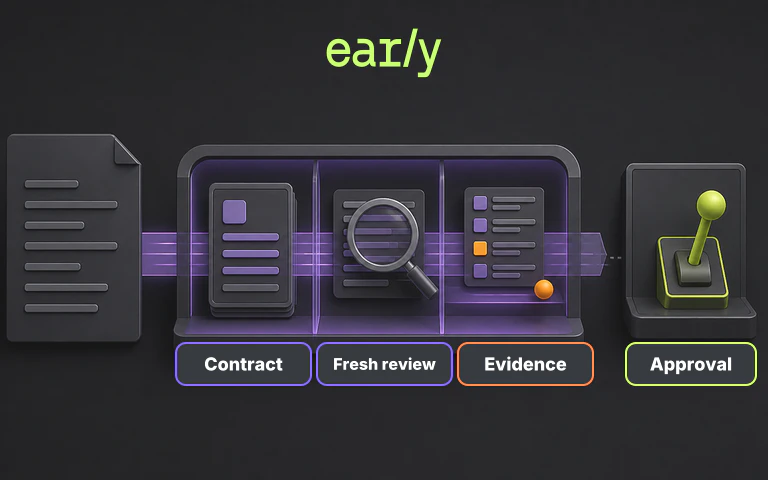
AI code review is useful, but it is not release verification. Code review evaluates a proposed change for defects, security issues, maintainability problems, and inconsistencies. Release verification asks a different question: did the release alter existing behavior anywhere the change can reach?
Teams need both. A reviewer can correctly explain a pull request, identify a bug in it, and suggest a sound fix. None of those results proves that dependent components, runtime behavior, configuration, data contracts, or performance stayed intact.
That distinction matters more as coding agents increase the amount of change a team can produce. The review surface grows with the output. The evidence needed to release the result does not appear automatically.
What AI code review does well
AI code review can make pull-request review faster and more consistent. It can identify common bugs, security vulnerabilities, style inconsistencies, and complex logic that deserves attention. It can also explain unfamiliar code and propose concrete changes.
Modern reviewers are not limited to the literal diff. GitHub documents that Copilot code review can gather full-project context and use repository instructions, agent skills, and connected tools. That makes the review more informed than a line-by-line reading.
The limitation is still important. GitHub also states that Copilot is not guaranteed to find every problem and tells users to validate its feedback and supplement it with human review.
That is the right expectation. AI code review is a strong source of review feedback. It is not a universal correctness proof.
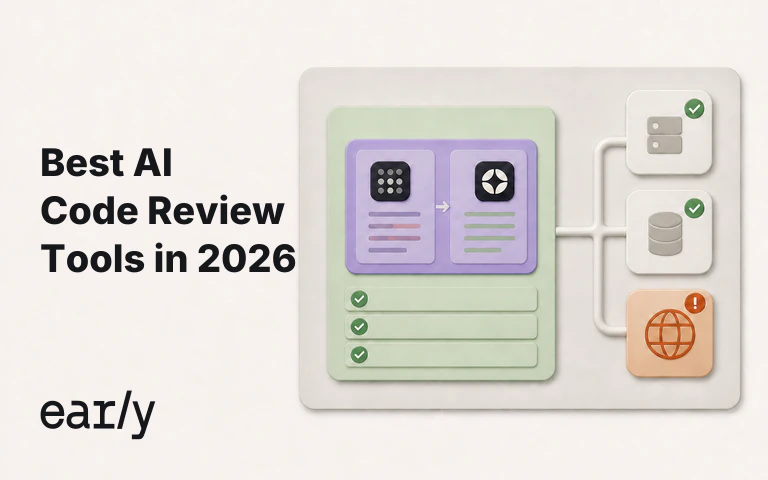
Teams evaluating this category can compare the best AI code review tools and use seven AI code review practices to define context, permissions, evidence, and accountable approval.
Repository context is not proof
Giving a reviewer more repository context improves its reasoning. It does not change the type of evidence the team receives.
A model may read the callers of a changed function, inspect nearby tests, trace types across packages, and flag an apparent compatibility problem. That is valuable analysis. It remains a prediction about what the release could do.
Release evidence comes from observing or testing the behavior that matters. Depending on the system, that may require contract tests, integration tests, browser tests, performance benchmarks, deployment checks, production telemetry, or a comparison with an approved baseline. Repository context can help select and interpret those checks. It cannot stand in for their results.
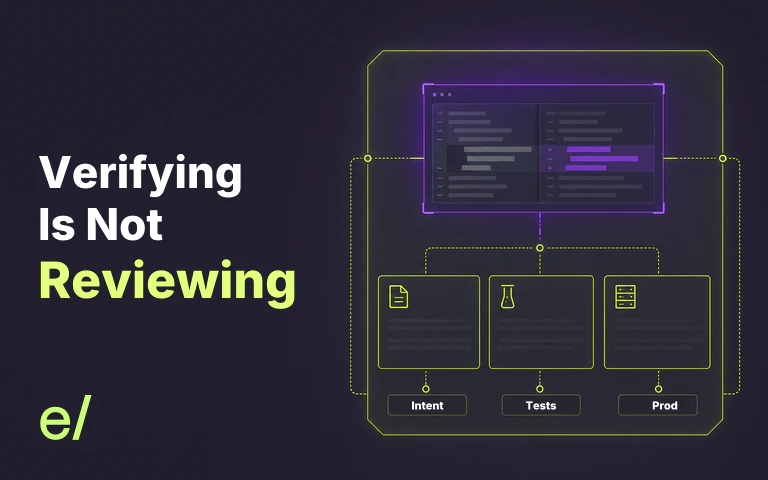
The distinction is therefore not diff context versus full context. It is review reasoning versus verified release evidence.
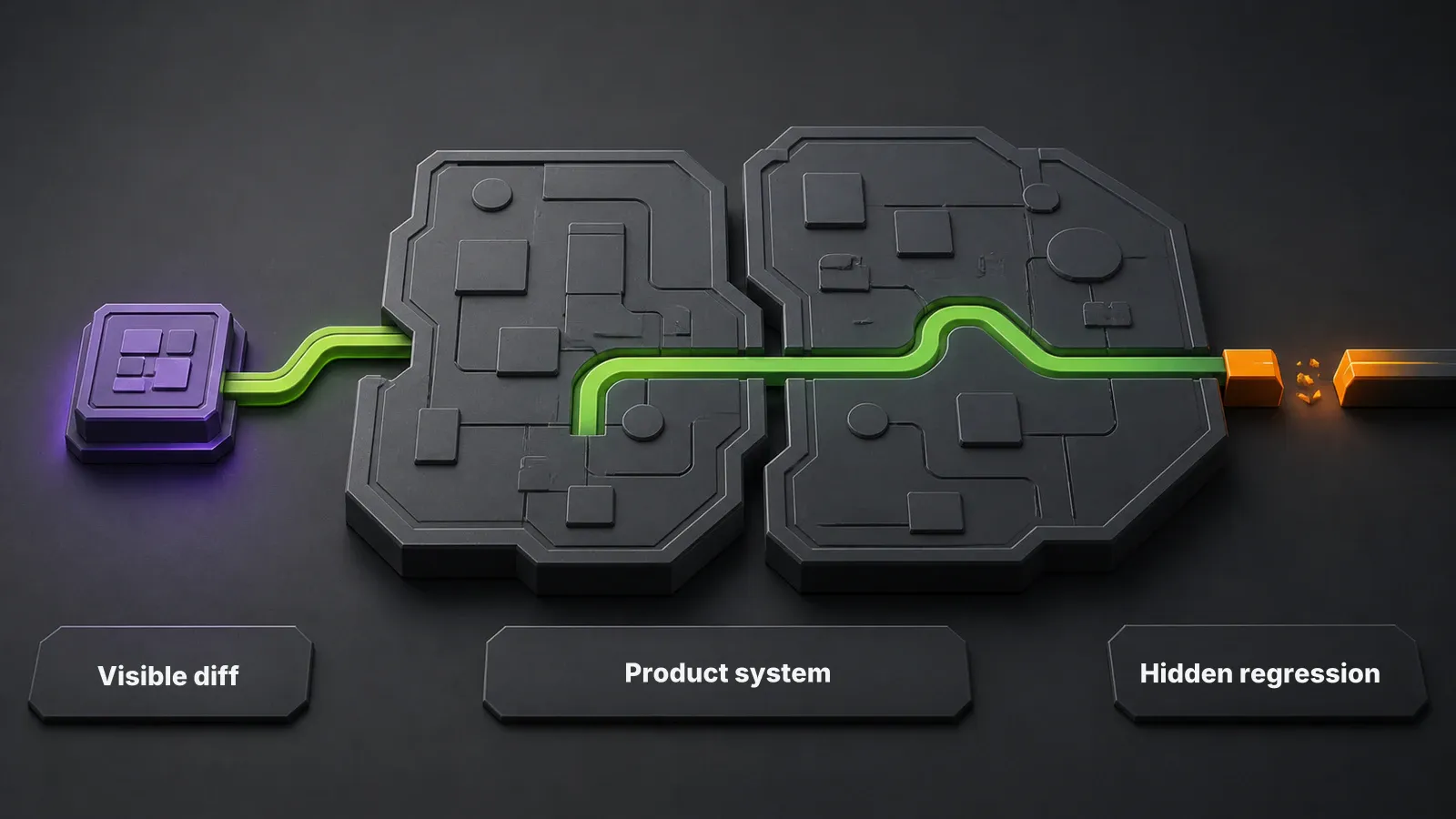
Code review vs release verification
Code review and release verification examine the same change from different directions. Code review starts with what was written. Release verification starts with what must continue to work.
| Question | AI code review | Release verification |
|---|---|---|
| Primary question | Is this proposed change sound? | Did this release alter expected behavior? |
| Main inputs | Diff, repository context, instructions, and static analysis | Release candidate, tests, runtime evidence, dependencies, and an approved reference point |
| Typical output | Findings, explanations, and suggested fixes | Evidence about preserved, changed, or regressed behavior |
| Strongest at | Defects visible through code and repository reasoning | Consequences that appear when the changed system runs or interacts |
| Decision role | Improves the change before approval | Informs whether the release has enough evidence to ship |
The boundary is simple: code review checks the change. Release verification checks the consequence.
This does not make release verification superior to code review. A release built from poor code should be reviewed. A cleanly reviewed change should still be verified against the behavior and operational conditions it can affect.
How AI review supports verification
AI code review supports software verification and validation by finding risks early, explaining the implementation, and directing human attention toward checks that should run. It is one input into the process, not the whole process.
The terms themselves describe different goals. The NIST glossary describes verification as establishing that specified requirements are fulfilled. Its validation definition focuses on whether stakeholder needs and the intended use are met.
An AI reviewer can help with both by identifying missing checks, questionable assumptions, or code paths that deserve inspection. But the review comment is not the confirming evidence. The test result, benchmark, observed behavior, or accountable human assessment is.
This is also why verifying AI-generated code is a different job from reviewing it. Review asks whether the implementation makes sense. Verification asks what evidence justifies trusting the outcome.
Can AI review catch regressions?
AI code review can catch some regressions before merge, including performance risks, when the relevant cause is visible in code and the reviewer has enough context to reason about it. An AI code review result alone cannot establish that no regression exists.
A reviewer may notice an unbounded loop, repeated database query, blocking call, missing cache, or more expensive algorithm. Those are credible performance findings. Other regressions emerge only under realistic data volumes, concurrency, infrastructure, configuration, network conditions, or interactions with dependent services.
Configuration-only regressions are a clear example. The code may be sound while its deployed behavior still changes.
For those cases, the review should lead to evidence. Run a benchmark against the baseline. Exercise the affected contract. Compare latency and resource use under a representative workload. Inspect the behavior of dependent components. The AI review can propose the investigation, but the measured result carries the claim.
The bottleneck moved downstream
The pressure behind this distinction is measurable, even if one survey cannot describe every engineering organization.
In GitLab’s 2026 survey of 1,528 DevSecOps professionals across six countries, 85% of respondents agreed that AI had shifted the bottleneck from writing code to reviewing and validating it. Another 84% agreed that governing what happens after AI-generated code is created is the larger challenge.
Those are self-reported perceptions from a vendor-sponsored survey, not proof that every team has the same bottleneck. They still describe the operating tension clearly. Faster implementation moves pressure toward review, testing, security, release decisions, and production feedback.
The answer is not to ask reviewers to read faster forever. It is to separate the jobs and demand evidence appropriate to each one.
What release evidence should include
A release does not need every possible check. It needs evidence proportional to what changed and what failure would cost.
Before shipping a material change, teams should be able to answer:
- What changed? The pull request, intent, implementation, and configuration are understood.
- What could be affected? Changed and dependent components, contracts, and expected behaviors are identified.
- What evidence was produced? Relevant tests, benchmarks, security checks, and operational checks ran against the release candidate.
- What remains uncertain? Gaps, skipped checks, and assumptions are visible rather than buried in a green status.
- Who owns the decision? An accountable person decides whether the available evidence is enough to release.
AI can assist every step. Responsibility remains with the team shipping the result.
The sequence matters. Review findings can change the implementation before verification runs. Release evidence should be produced from the candidate the team actually intends to ship, not from an earlier commit that later changed.
The decision boundary
AI code review has become broader, more contextual, and more capable. That strengthens the case for using it. It does not erase the boundary between reviewing a change and verifying a release.
Early calls the broader problem Regression Intelligence: understanding which existing behaviors a release could affect and identifying downstream regressions before release. The point is not another opinion on the diff. It is better evidence about the consequence.
A clean review can tell you that the change looks reasonable. Release verification tells you whether the product still behaves as expected. Teams shipping more code with agents should stop treating those as the same answer.
About the author