Early Release Guard vs. AI Code Review
Find and fix bugs beyond the Pull Request.
Code Reviewed. Still shipping bugs?
An API changes its response format. A consuming service still expects the old one. The Pull Request can pass review while the product workflow breaks.
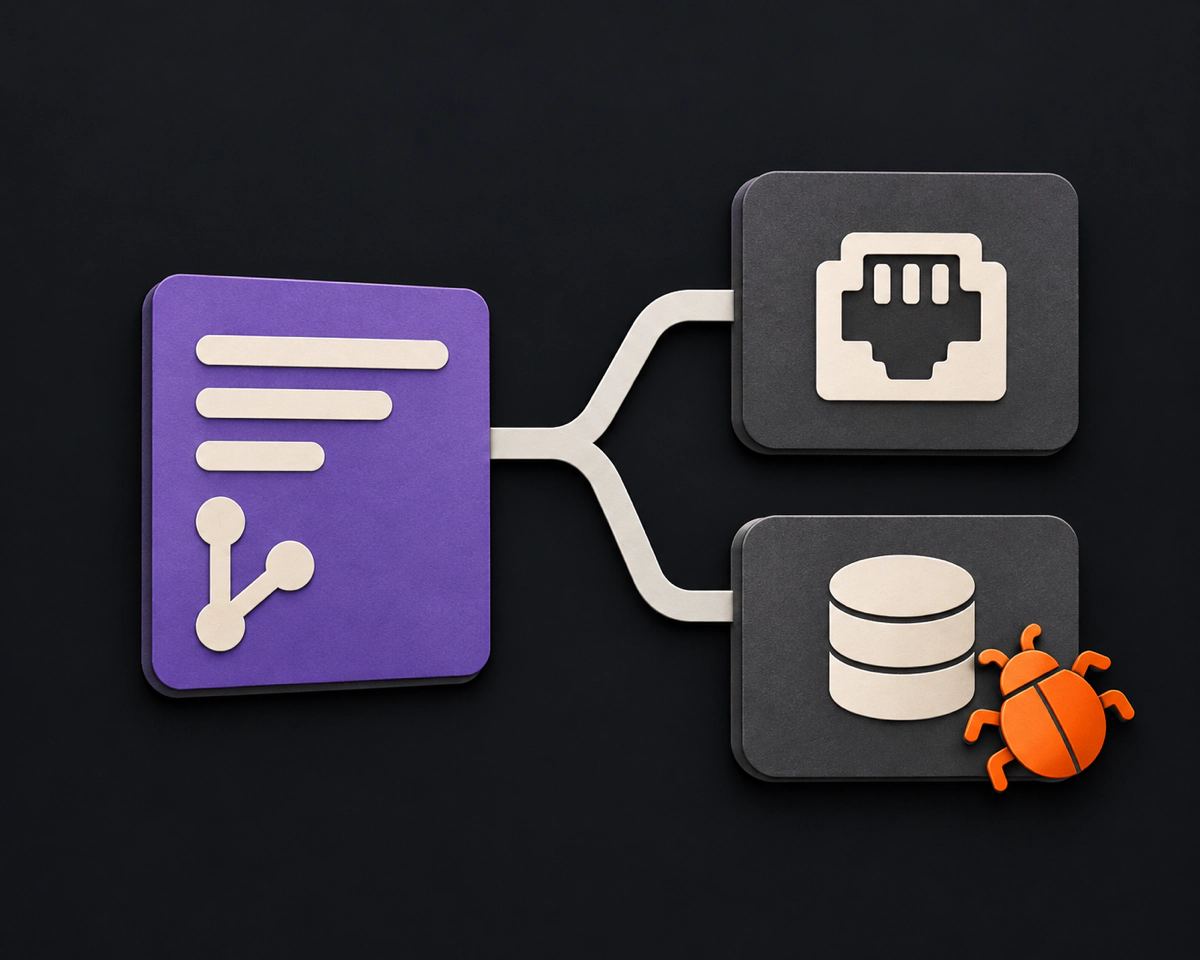
Early investigates beyond one Pull Request.
Give QA the power to find and fix bugs.
Early finds and fixes bugs across your product and dependent projects. Engineers review the fixes and control the merge.
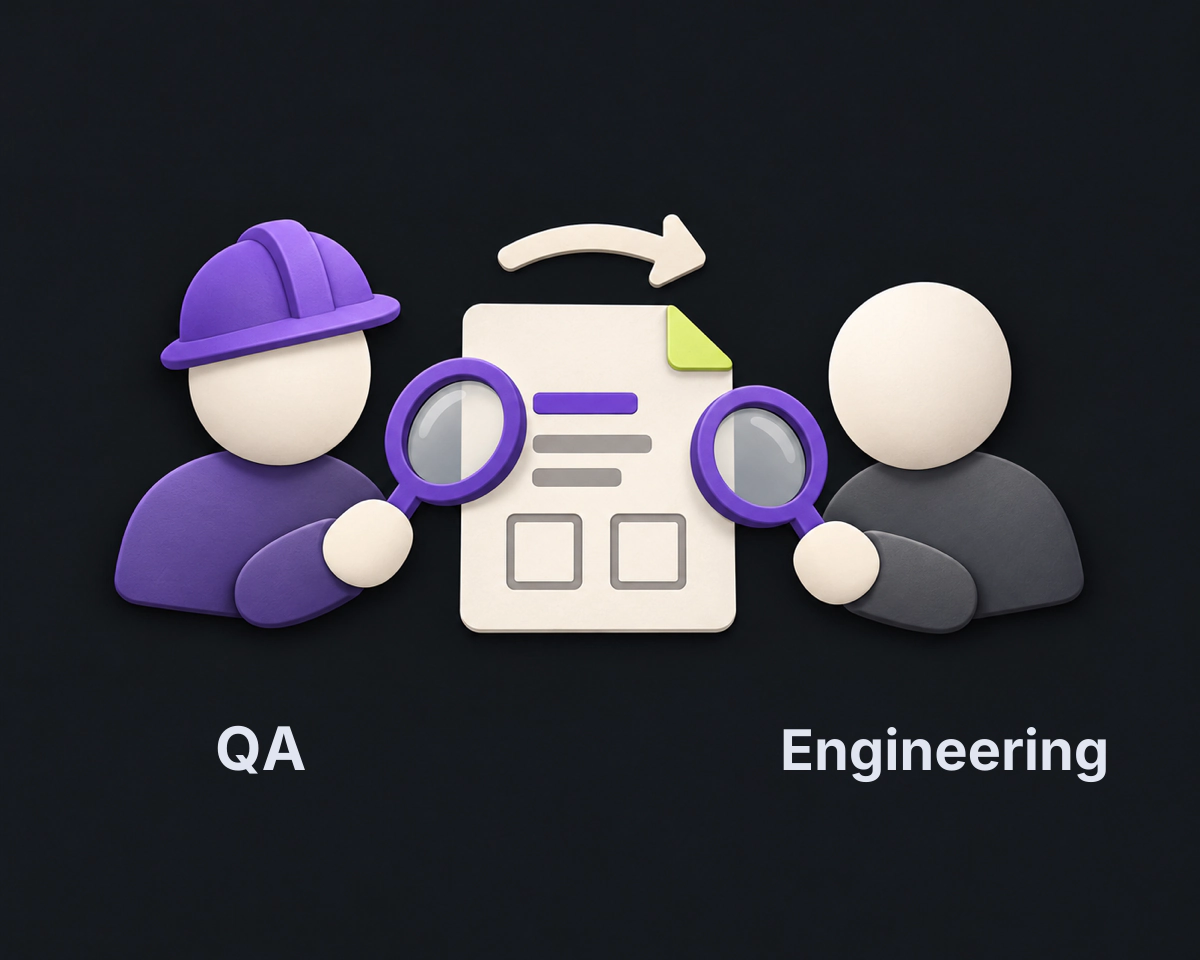
Compare scope and fixes.
| Compare | CodeRabbit review | Cursor Bugbot | Copilot review | Early Release Guard |
|---|---|---|---|---|
| Who | Developers | Developers | Developers | QA + engineering leadersDevelopers too |
| Code review | Supported. | Supported. | Supported. | PR analysis: find + fixConditional. |
| Investigation | PR + linked repos | PR / branch | Changes + repo | Across product + dependent projects |
| Bug hunters | Review findings | Review findings | Review findings | Regressions Bugs Security DevOps |
| Regression analysis | PR impactConditional. | PR / branch reviewConditional. | Change reviewConditional. | Target vs. baselineSupported. |
| Fix delivery | Commit / stacked Pull RequestSupported. | Autofix branchSupported. | Agent handoffConditional. | Fix + tests in a Pull RequestSupported. |
Check: supported. Circle: narrower or separate workflow.
Comparison details
Checked October 25, 2026. Compared by Early. Named workflows, not entire platforms.
CodeRabbit review
- Starts from: Pull Request (opens in a new tab)
- Can reference linked repositories.
- Investigation: Pull Request review (opens in a new tab)
- Can use linked repositories, subject to plan limits. Not limited to changed lines.
- Fix delivery: Commit to existing Pull Request or stacked Pull Request (opens in a new tab)
- Fix comments implements unresolved review findings.
- Tests added: Test-generation action (opens in a new tab)
- Requested separately; delivered as a commit or Pull Request.
- Checks run: Setup + build verification (opens in a new tab)
- Changes can still be delivered when verification fails.
- Bugs: Breaking changes + dependencies (opens in a new tab)
- Not restricted here to newly introduced bugs.
- Control: Validate changes (opens in a new tab)
- Validate before accepting either delivery mode.
- Who: Developers (opens in a new tab)
- Primary audience of the compared review workflow, not an access restriction.
- Code review: Application code review (opens in a new tab)
- Reviews proposed code changes and their impact.
- Bug hunters: Review findings (opens in a new tab)
- Includes cross-repository breaking changes and dependency issues. This label does not imply security or operational findings are excluded.
- Regression analysis: PR impact (opens in a new tab)
- Documents cross-repository impact during review. An equivalent release-candidate regression workflow against an approved baseline was not established in the reviewed documentation. Partial denotes adjacent capability, not verified feature parity.
Cursor Bugbot
- Starts from: PR or branch (opens in a new tab)
- Pull Requests or branch changes through its agent review skills.
- Investigation: PR or branch changes (opens in a new tab)
- Uses review context. Release-baseline dependency analysis is not established here.
- Fix delivery: Autofix on existing or new branch (opens in a new tab)
- Provider-dependent; unavailable on Azure DevOps.
- Tests added: Not established (opens in a new tab)
- Not established in the reviewed Autofix documentation.
- Checks run: Cloud environment (opens in a new tab)
- Inspect run evidence, not just Autofix completion.
- Bugs: Bugs + security issues (opens in a new tab)
- Also covers code-quality problems.
- Control: Configure + review (opens in a new tab)
- Autofix may push to the existing branch. Review the result before merge.
- Who: Developers (opens in a new tab)
- Primary audience of the compared review workflow, not an access restriction.
- Code review: Application code review (opens in a new tab)
- Reviews bugs, security issues, and code-quality problems in Pull Requests.
- Bug hunters: Review findings (opens in a new tab)
- Includes bugs, security issues, and code-quality problems.
- Regression analysis: PR / branch review (opens in a new tab)
- Documents change review. Separate scheduled cloud-agent automations do not establish an equivalent release-baseline regression workflow. Partial denotes adjacent capability, not verified feature parity.
Copilot review
- Starts from: PR or IDE (opens in a new tab)
- Includes repository context.
- Investigation: PR or IDE review (opens in a new tab)
- Uses repository context, which MCP can extend; a release-baseline scan is not established here.
- Fix delivery: Agent handoff to new Pull Request (preview) (opens in a new tab)
- Review-to-agent handoff is public preview.
- Tests added: Agent task (opens in a new tab)
- Task-dependent, not guaranteed by review handoff.
- Checks run: Agent tests + linters (opens in a new tab)
- Depends on environment and instructions. Inspect logs and CI results.
- Bugs: Issues found during review (opens in a new tab)
- Context extends beyond changed lines.
- Control: Human review and merge (opens in a new tab)
- Cloud agent cannot approve or merge its Pull Request.
- Who: Developers (opens in a new tab)
- Primary audience of the compared review workflow, not an access restriction.
- Code review: Application code review (opens in a new tab)
- Reviews proposed changes with repository context.
- Bug hunters: Review findings (opens in a new tab)
- Identifies issues from multiple review perspectives. This is not an exclusive defect-category comparison.
- Regression analysis: Change review (opens in a new tab)
- Documents repository-context review. Separate agent automations do not establish an equivalent release-baseline regression workflow. Partial denotes adjacent capability, not verified feature parity.
Early Release Guard
- Starts from: Release window
- Nightly changes, release candidate, or test window.
- Investigation: Post-merge product analysis
- Analyzes selected product code and configured dependencies across nightly changes, release candidates, or a test window. This describes the workflow compared here, not an exclusively post-merge limitation or exhaustive coverage.
- Fix delivery: Implemented fix + tests in a draft Pull Request
- Eligible findings require authorized repair initiation.
- Tests added: Fix-related tests
- Generated tests do not mean passed tests.
- Checks run: Inspect recorded checks
- The linked case passed compilation; behavioral validation remained outstanding.
- Bugs: Existing bugs + baseline-relative regressions
- Regression comparison uses an approved baseline; existing-bug discovery is not exclusive to Early.
- Control: You control the merge
- No automatic merge or release; retain validation and QA.
- Who: QA + engineering leaders
- QA and engineering leaders can drive analysis and authorized repair. Engineers validate changes and control the merge.
- Code review: PR analysis: find + fix
- Early can analyze an individual Pull Request for bugs and implement fixes. It does not provide the broader application code-review workflow compared here.
- Bug hunters: Regressions · Bugs · Security · DevOps
- Dedicated bug-hunting modules. Regression hunting compares behavior against a baseline; general bug hunting also covers existing defects. Modules do not guarantee exhaustive coverage or imply competitors cannot identify these defect types.
- Regression analysis: Target vs. baseline
- The baseline is the reference code version. The target can be a release candidate, branch, or Pull Request branch. The analysis window can span changes from multiple Pull Requests since the previous run, depending on the chosen references. Regression Hunter investigates unintended behavior changes between baseline and target, including configured dependencies. General bug hunting is not limited to baseline differences, and baseline behavior is not necessarily correct.
Pilot for added value, not more findings.
Code review and release verification explainedFind the bug. Deliver the fix.
Early investigates selected product code and configured dependencies across recurring analysis windows.
Authorize a supported repair. Early implements the fix and adds tests. Engineers review, refine, and validate the Pull Request instead of starting the repair from scratch. Your team controls the merge.
See a real finding and fix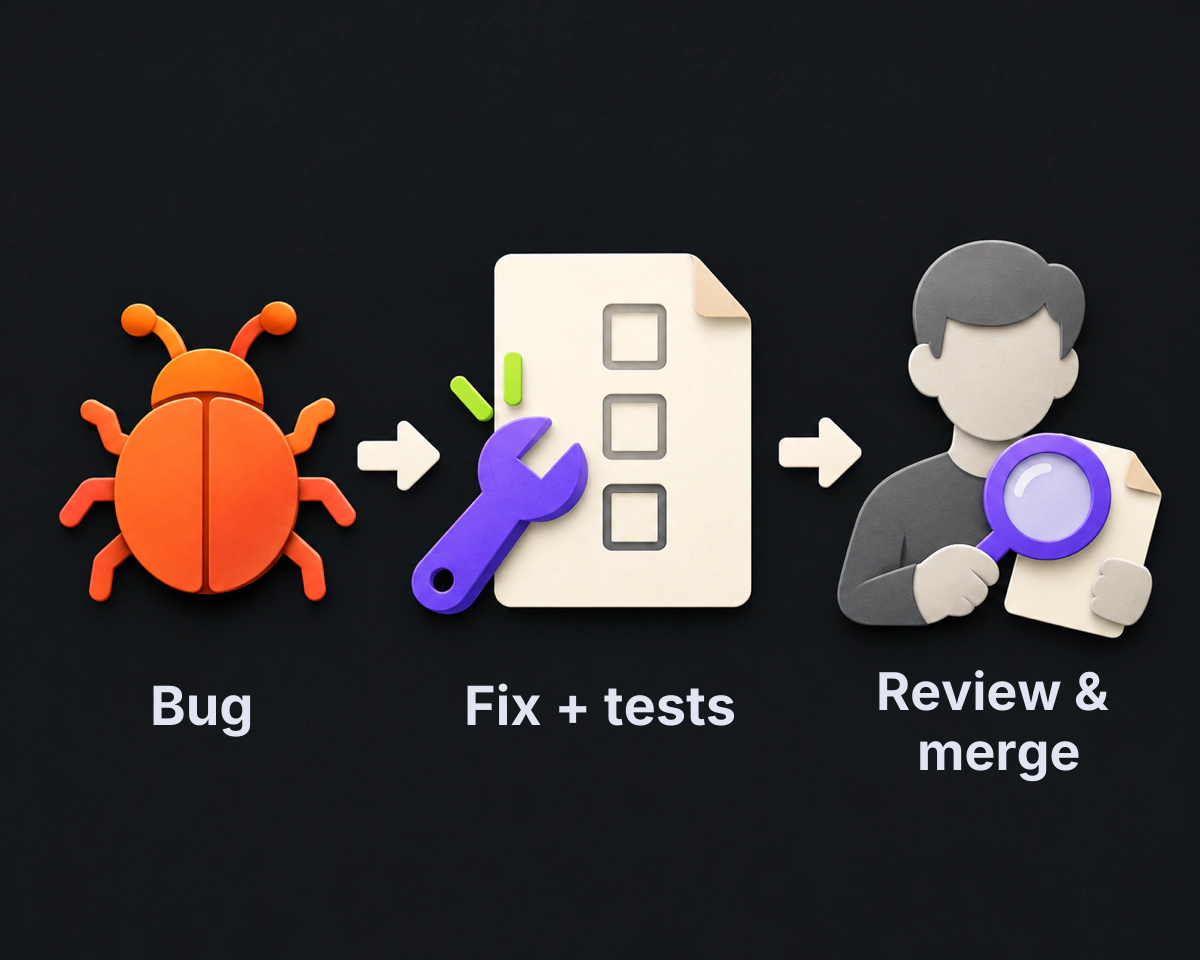

Less bug investigation. Less repair work.

Common questions
Does Early replace our code reviewer?
No. Keep your code-review process. Early adds recurring bug analysis and repair across your selected development and release windows.
Can Early find bugs that are not regressions?
Yes. Early can find general defects, including existing bugs, as well as regressions relative to an approved baseline. A baseline helps identify changes; it does not prove the original behavior was correct.
How do we know Early is worth adding?
Early finds and fixes bugs across your product and dependent projects after merge, beyond a single Pull Request. Measure its value through bugs caught before release, the quality of the fixes, and engineering time saved on investigation and repair.
Who initiates fixes and controls the merge?
An authorized user initiates repair for an eligible finding. Early implements the fix and opens a draft Pull Request with tests. Engineers review, amend, validate, and control the merge.