Meet Early
Regression Guard
Compare a release candidate or group of PRs with production. See affected flows and changed behaviour.
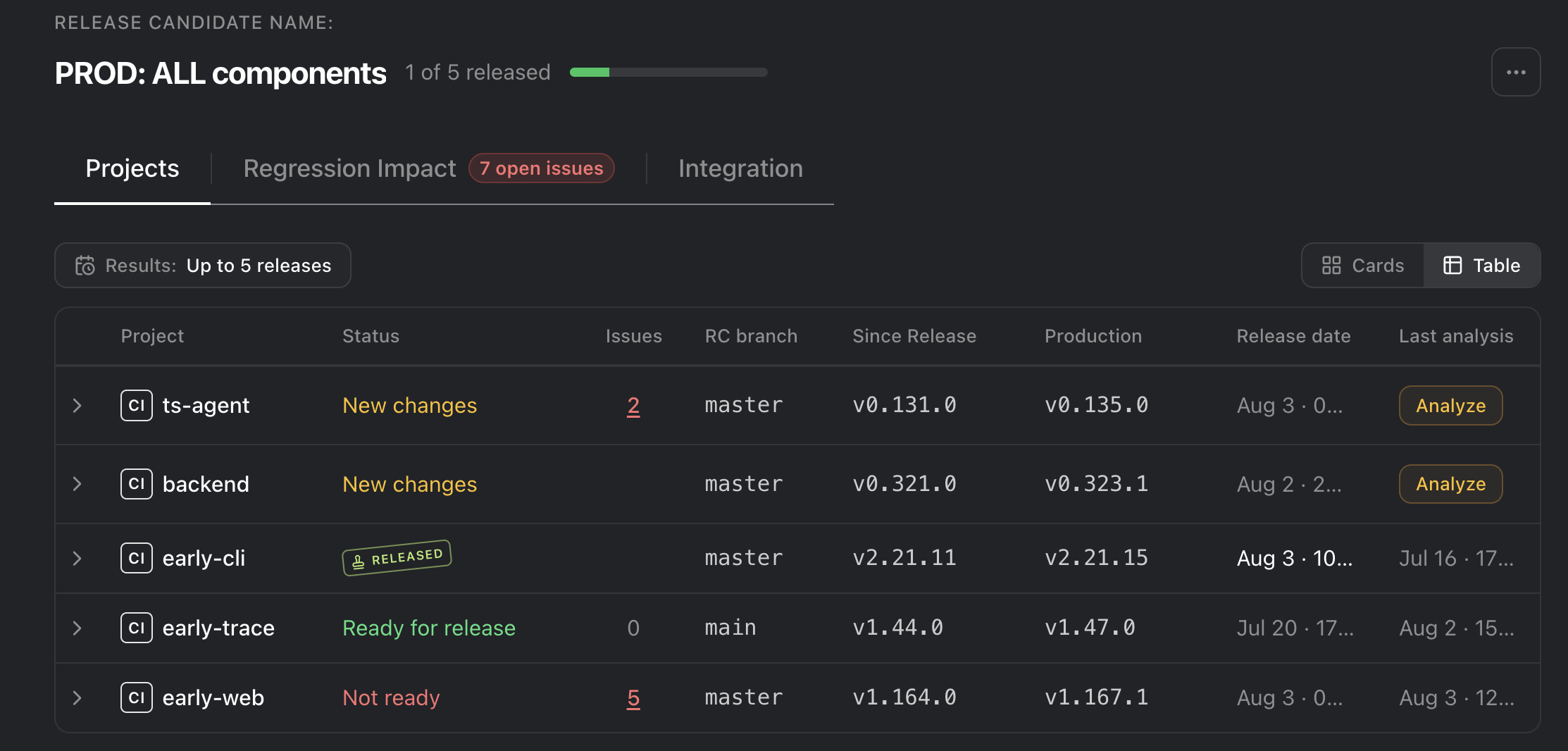
From code change to release decision
Map the impact
See the business flows affected across the project and its configured component relationships.
Cross-component analysis follows the relationships configured for the project.
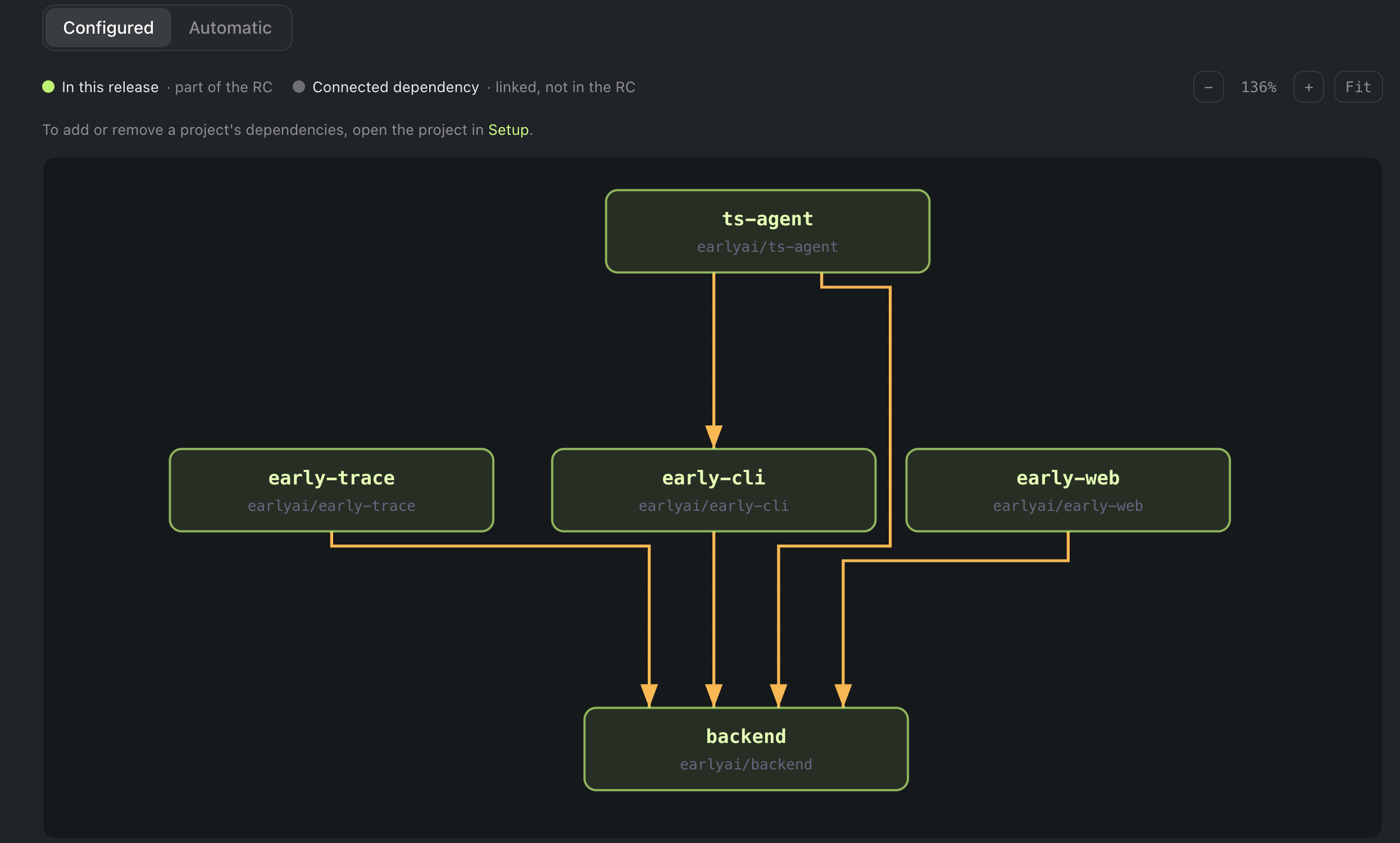
Affected flows across the release
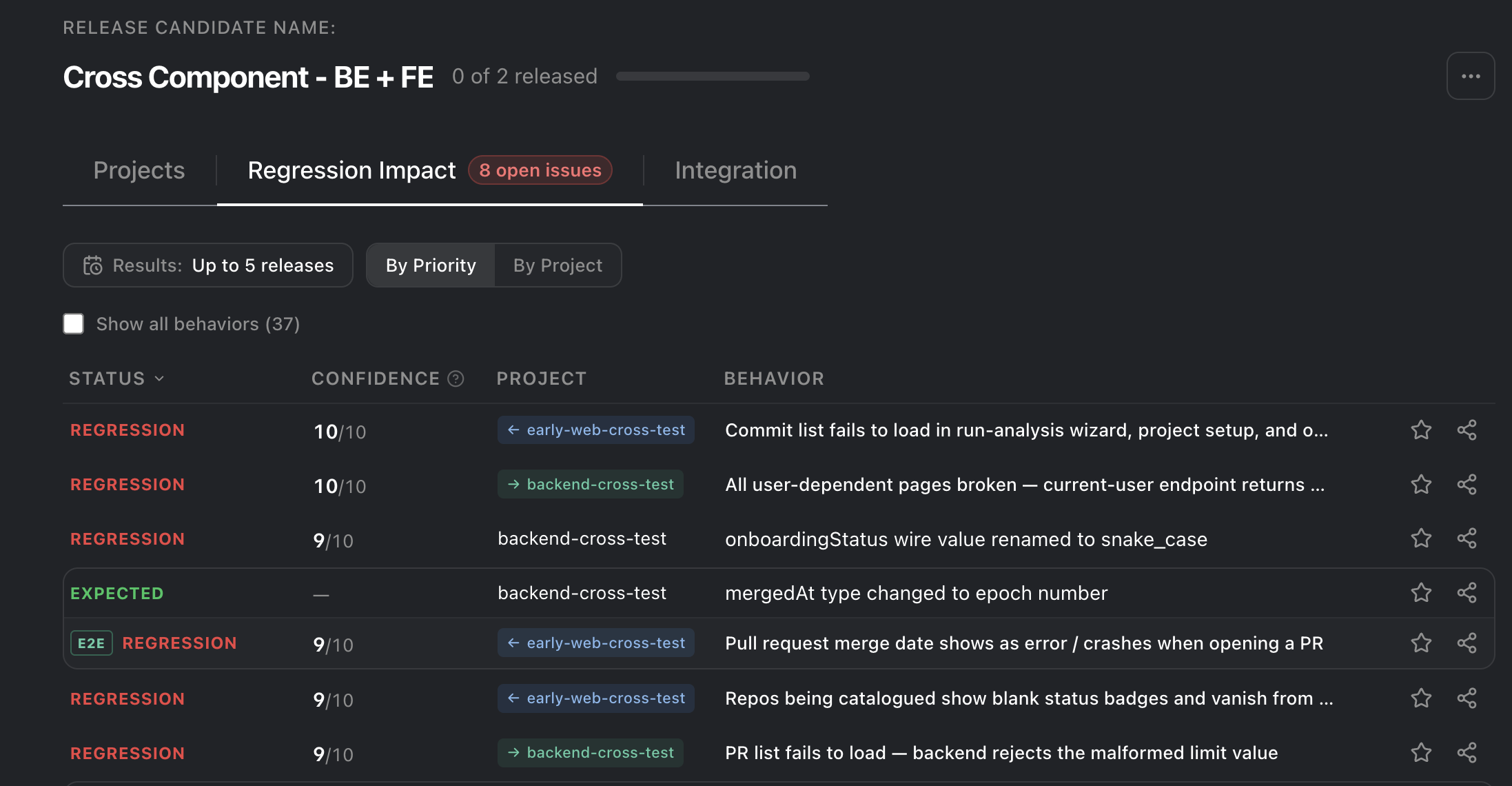
Expected or Regression
Compare behaviour with production
Narrow the impact map to behaviour that differs, then classify each change as Expected or Regression.
Decide release readiness
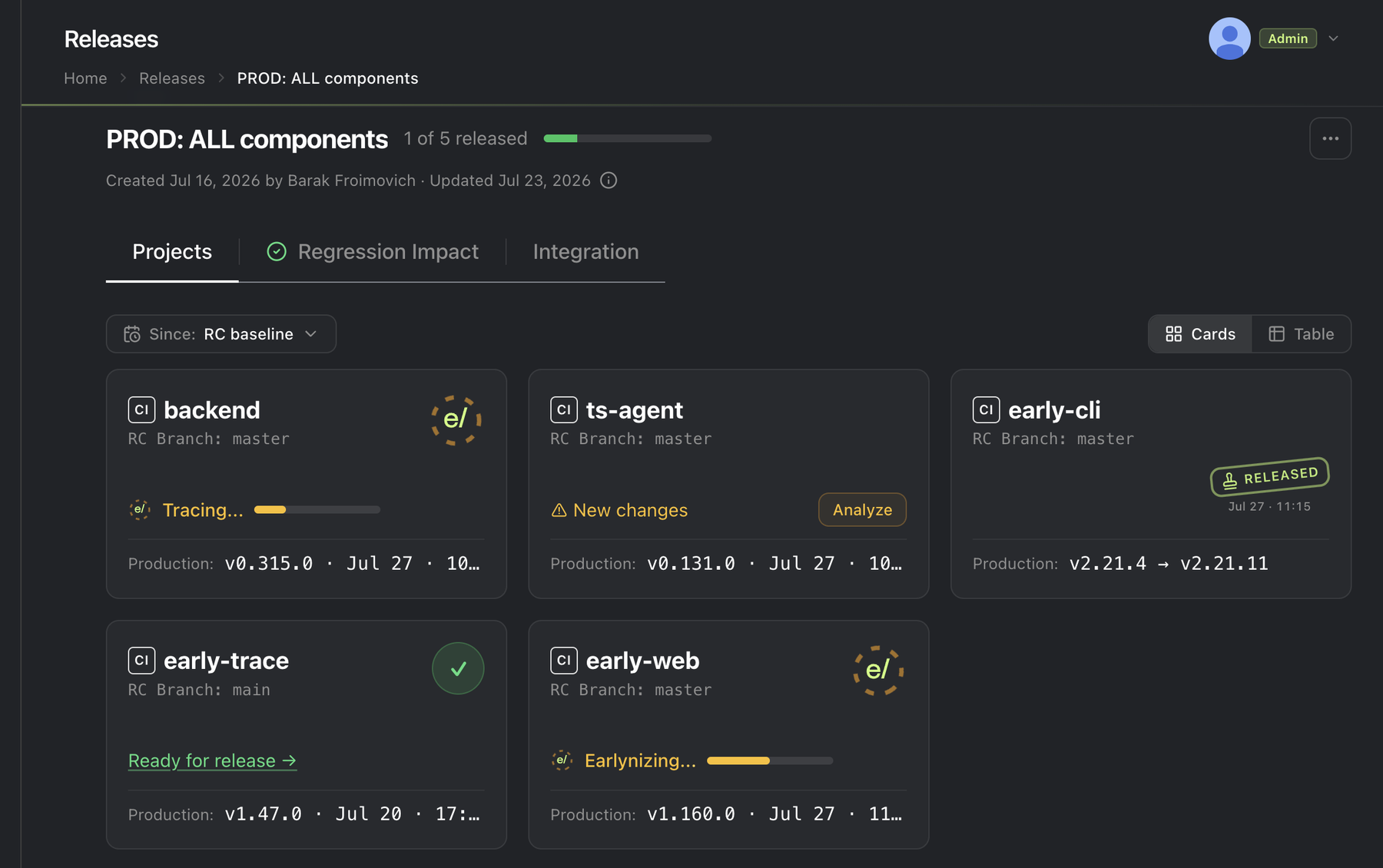
See open regressions and component readiness in one release record before shipping.
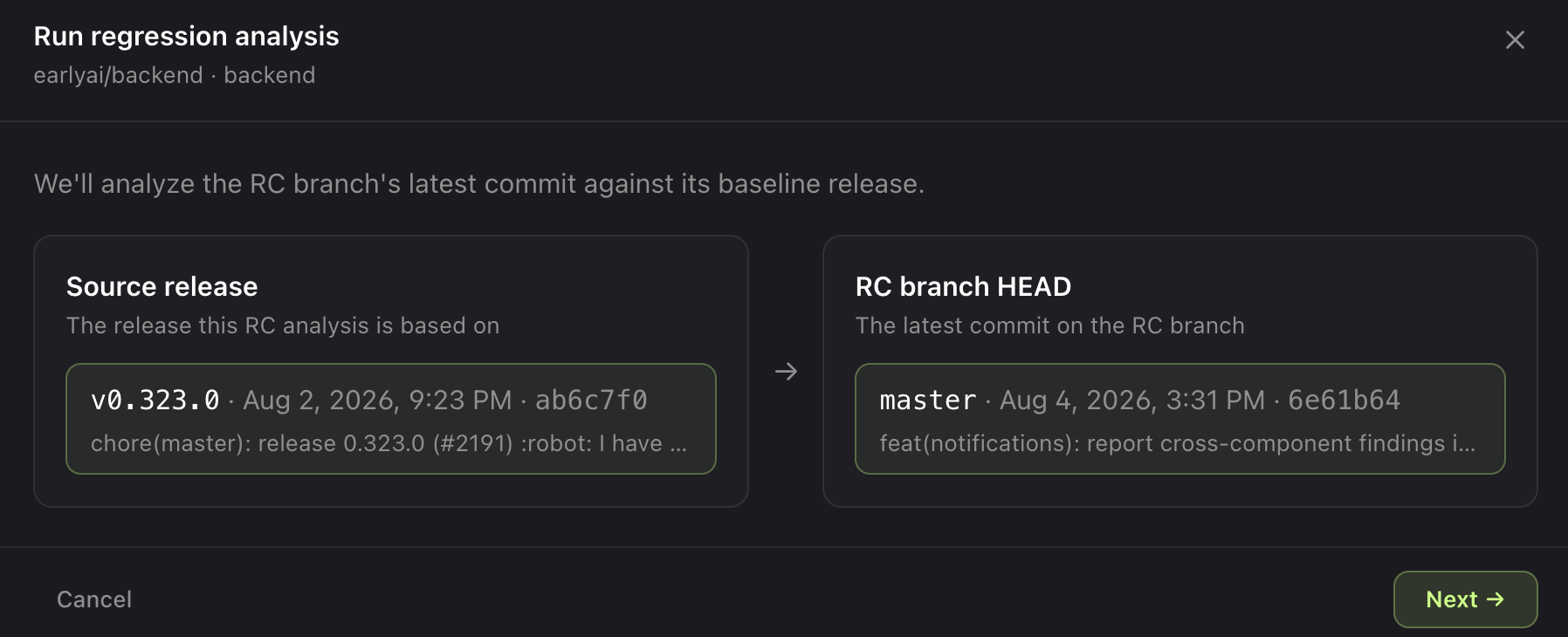
The release decision in context
How It Works
How Regression Guard works
The same workflow carries a change from source control to an inspectable release decision.
In four steps:
1
Onboard
Connect source control and set the production baseline for the project.
2
Analyze
Run against a release candidate or group of PRs to map affected flows and changed behaviour.
3
Classify
Intentional changes are Expected. Unexpected behaviour changes are Regressions.
4
Track
Keep the result linked to its release candidate and source history.
The result: A release decision backed by behaviour-level evidence.
The full change record
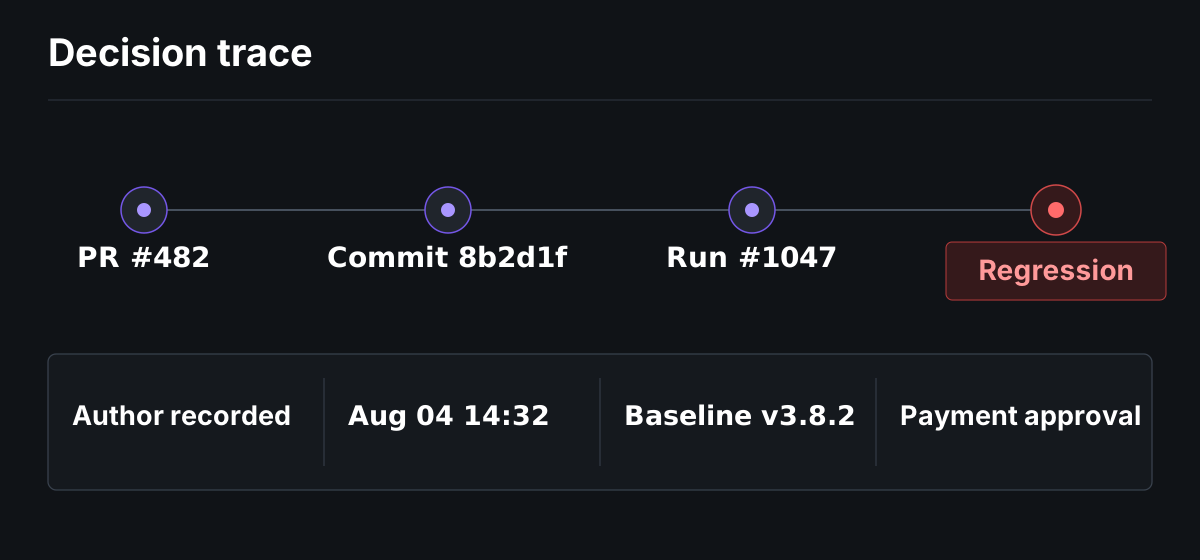
Trace every result to its source
Keep each changed behaviour linked to its PR, commit, author, timestamp and analysis run.
Run Early Regression Guard on your release candidate
Run a pilot against a known past regression.